
Many barre students struggle with plies by allowing knees to collapse inward and heels to lift prematurely, which compromises alignment and strength.
In arabesques, poor pelvic stabilization and lack of core engagement lead to imbalance and a dropped lifted leg. Isometric holds often fail due to gripping the barre too tightly and collapsing into joints, reducing muscle endurance.
Understanding these common mistakes is essential to enhance control, stability, and overall barre performance. Further insight reveals how to correct these issues effectively.
How to Fix Common Barre Plie Mistakes
When addressing common barre plie mistakes, attention to alignment and muscle engagement is essential — key techniques often emphasized in a professional barre class KL setting. Many dancers collapse their knees inward, compromising joint safety and reducing effectiveness.
Correcting this involves consciously pressing the knees outward, tracking over the second toe, and maintaining hip-width alignment. Another frequent error is allowing the torso to lean forward, which diminishes core activation. Encouraging an upright spine and lifted chest creates space for freedom of movement and breath.
Additionally, failing to engage the inner thighs leads to instability; activating these muscles supports balance and control. Finally, heels often lift prematurely, limiting strength development. Keeping the heels grounded throughout the movement fosters stability and power.
These adjustments liberate the body, enhancing both form and freedom in barre plies.
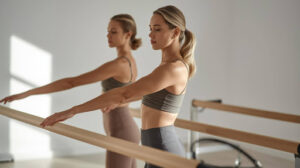
Arabesque Balance Tips to Improve Your Barre Form
Building on the foundation of proper alignment and muscle engagement established in barre plies, mastering arabesque balance demands focused control and spatial awareness.
Practitioners must engage the core and gluteal muscles to stabilize the pelvis and prevent overarching the lower back. Maintaining a lifted chest and elongated neck supports balance while encouraging freedom of movement.
The standing leg should be rooted firmly through the heel, grounding energy downward to create a stable base. Visual focus, or spotting, helps maintain equilibrium and prevents unnecessary tension.
Avoid letting the lifted leg drop or twist, as this disrupts form and limits fluidity. Incorporating mindful breath supports calmness and steadiness, essential for holding balance with ease.
These precise adjustments empower a freer, more expressive arabesque in barre practice.
Perfect Your Barre Isometric Holds for Better Strength
Mastering barre isometric holds requires deliberate muscle engagement and mental focus to enhance strength without dynamic movement — techniques commonly emphasized in structured barre pilates programs available at https://la-pilatesstudio.com/.
These holds challenge the body to maintain tension in targeted muscles, fostering endurance and control while minimizing joint strain. Proper alignment is essential—engaging the core, lengthening the spine, and activating the legs evenly prevents compensations that limit effectiveness.
Breath control supports sustained effort, helping release tension and maintain freedom of movement within the hold. Avoid common mistakes like collapsing into joints or gripping the barre too tightly, which restrict mobility and reduce strength gains.
By refining isometric holds, practitioners build a resilient foundation that empowers fluidity and freedom across all barre exercises, transforming static effort into dynamic strength.
Conclusion
Mastering barre techniques requires attention to detail and mindful corrections. By addressing common plie mistakes, refining arabesque balance, and perfecting isometric holds, practitioners can markedly enhance their form and strength.
These adjustments not only improve performance but also reduce the risk of injury. Consistent practice with proper alignment and engagement guarantees that barre movements are executed safely and effectively, leading to better results and a more rewarding exercise experience overall.